Wire Transfer Verification Policy Template
Wire fraud succeeds when verification is informal. A team member “knows” to call and confirm wiring changes, but when closing day pressure hits and the instructions arrive at 4:45 PM, the informal process breaks down. Written policies with specific procedures remove ambiguity and give staff a concrete protocol to follow when the pressure is highest.
This template gives your firm a starting point.
A structured wire transfer verification policy you can customize for your organization and distribute to every person who handles payments.
Customized for your organization
What the Template Covers
This is not a general cybersecurity policy. It is a single-purpose document focused specifically on wire transfer verification in transaction-heavy environments:
- Out-of-band verification procedures for every wiring instruction change, including which communication channels qualify and which do not
- Dual authorization requirements defining who can initiate and approve outgoing wire transfers, with specific dollar thresholds
- Callback verification protocol specifying that contact numbers must come from original records, not from the email or message containing the request
- Passphrase procedures for establishing and using verbal confirmation codes with transaction counterparties
- Last-minute change escalation defining enhanced scrutiny for wiring instructions received within 24 hours of closing
- Exception handling making explicit that urgency, seniority, and confidentiality are not valid reasons to bypass verification
- Incident response steps for what to do in the first hour if a suspicious transfer is identified
Who This Is For
This template was built for organizations where wire transfers are a regular part of operations and where the parties involved frequently change:
- Commercial real estate firms handling acquisition, disposition, and development transactions
- Title companies and escrow agents managing closing funds for multiple parties
- Real estate development firms wiring payments to contractors, consultants, and capital partners
- Property management companies processing owner distributions and vendor payments
- Law firms handling real estate closings and trust account disbursements
If your organization regularly sends or receives wire transfers on behalf of clients or counterparties, this policy applies to you.
Why a Written Policy Matters
Most firms that suffer wire fraud losses had some version of a verification process in place. The problem is that the process was informal, inconsistently applied, or had exceptions that attackers exploited.
A written policy solves three problems.
It removes judgment calls under pressure. When a new employee receives an urgent email requesting a wiring change 30 minutes before closing, a written policy tells them exactly what to do. Without it, they make a judgment call, and attackers engineer their messages to ensure that judgment call goes their way.
It satisfies insurance and compliance requirements. Cyber insurance carriers increasingly ask whether your organization has documented payment verification procedures. A written policy with evidence of distribution and training strengthens your position in both underwriting and claims. Our Cyber Insurance Readiness Checklist covers the full set of controls carriers evaluate.
It creates accountability. When the policy is written, distributed, and acknowledged by every team member, there is no ambiguity about whether the process should have been followed. This protects both the firm and the individual in the event of a loss.
What You Get
The template is a Word document ready to customize for your organization. It includes:
- Policy purpose and scope statement
- Defined roles and responsibilities for verification, approval, and escalation
- Step-by-step verification procedures for new wiring instructions, changes to existing instructions, and last-minute updates
- Passphrase establishment and management procedures
- Dual authorization matrix with dollar thresholds
- Escalation procedures for suspected fraud
- Acknowledgment form for staff distribution
- Quarterly review checklist
Customize the dollar thresholds, role titles, and contact information for your firm, then print and distribute.
Built by Practitioners
This template was developed from the wire fraud prevention controls we implement for managed security clients across Texas, informed by FBI IC3 guidance, American Land Title Association best practices, and real-world BEC prevention experience. It reflects what actually works in transaction-heavy organizations, not theoretical recommendations from a compliance framework.
For a broader look at the BEC threat and the technical controls that complement this policy, see our IT security checklist for real estate firms and our BEC action plan for SMBs.
Get the Wire Transfer Verification Policy Template
Contact us to receive a customized copy of this template for your organization.
Request the TemplateRelated Resources
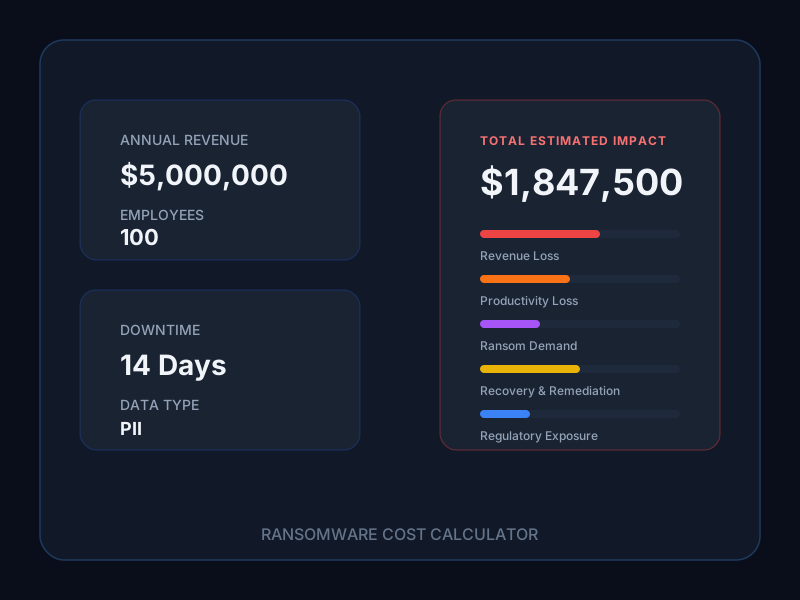
Ransomware Cost Calculator
Estimate the total financial impact of a ransomware attack on your organization based on revenue, headcount, data type, and existing controls.
View resource →
Current-State Risk Scorecard
Evaluate your organization's IT risk posture across eight security domains with clear maturity scores and financial implications.
View resource →Cyber Insurance Readiness Checklist
The 15 controls cyber insurers actually verify, mapped to your current posture, cost to close each gap, and premium impact.
View resource →Ready to Get Started?
Contact us today for a complimentary assessment valued at up to $25,000.