JFrog Artifactory Vulnerabilities: Patch, Hunt, and Restore Trust
Three JFrog Artifactory vulnerabilities are under active attack. Learn how to patch, remove persistence, revoke access, and verify artifacts.
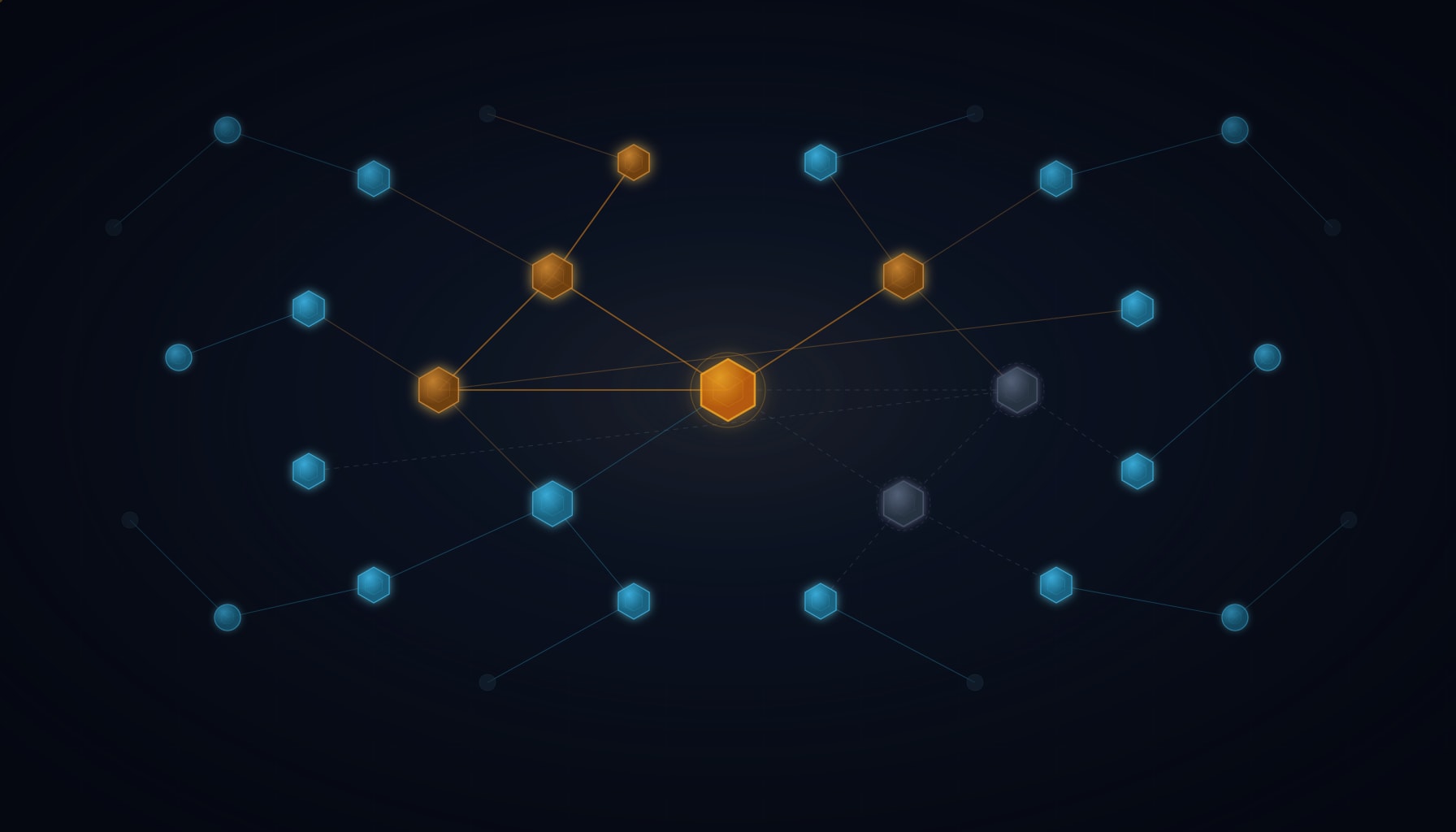
Multiple attackers are exploiting three patched JFrog Artifactory vulnerabilities to gain administrative control over affected self-hosted systems.
Organizations should upgrade immediately—but the patch is only the first step.
Once an attacker has obtained administrator access, updating Artifactory does not automatically remove malicious accounts, plugins, tokens, backdoors, or web shells. It also does not prove that packages and containers distributed during the exposure period remain trustworthy.
Recovery requires four separate conclusions: the vulnerable path is closed, persistence has been removed, stolen authority has been revoked, and affected artifacts remain trustworthy.
Key takeaways
- CVE-2026-42018 and CVE-2026-42016 can be chained to turn an unauthenticated request into administrative access.
- CVE-2026-82329 provides another path to administrative privileges under affected default configurations.
- Attackers have created administrator accounts and deployed malicious plugins, backdoors, tokens, and web shells.
- JFrog has released fixes for every affected branch.
- Patching does not complete the investigation or restore trust in previously distributed artifacts.
Which Artifactory vulnerabilities are being exploited?
The three vulnerabilities reach administrative authority through two different paths.
CVE-2026-42018 can expose an internal anonymous-user token to an unauthenticated caller—even when anonymous access is disabled.
CVE-2026-42016 fails to enforce the intended scope of an otherwise valid token. Researchers observed attackers combining these two flaws to elevate the anonymous token to administrative authority.
CVE-2026-82329 is a separate critical authentication weakness. Under affected default configurations, an unauthenticated attacker with network access may obtain administrative privileges.
All three appear in CISA’s Known Exploited Vulnerabilities catalog. JFrog lists affected and fixed releases by product branch, so administrators should compare their running version directly with the official JFrog security advisories.
JFrog says affected cloud environments were fortified. Self-hosted operators must install the applicable fixed release.
What have attackers done after exploitation?
Wiz Research documented multiple actors exploiting the vulnerabilities—not one uniform campaign.
Observed activity included:
- Creating persistent administrator accounts.
- Minting privileged or long-lived tokens.
- Adding attacker-controlled access.
- Installing malicious Groovy plugins for command execution.
- Deploying custom Rust backdoors.
- Uploading web shells and secondary payloads.
- Searching for configuration files, credentials, users, repositories, and tokens.
- Extracting sensitive configuration information.
These observations do not mean every vulnerable system experienced every action. They demonstrate that exploitation can continue well beyond the initial administrative compromise.
Why is this a software-supply-chain incident?
Artifactory may distribute the packages, containers, plugins, and dependencies used throughout an organization’s software-delivery process.
An attacker with administrative authority may be able to modify repository settings, create users, issue credentials, inspect integrations, execute plugins, or alter stored content. Connected pipelines may continue trusting the repository without recognizing that its control plane was compromised.
The potential incident boundary can therefore include:
- Package and container repositories.
- CI/CD runners and deployment services.
- Build credentials and access tokens.
- Signing and release processes.
- Remote repositories and federation peers.
- Cloud or Kubernetes environments reached by pipelines.
- Applications deployed from affected artifacts.
Administrator access does not prove that artifacts were replaced. It means their integrity must now be demonstrated rather than assumed.
Patching provides only one of four required proofs
| Recovery question | Evidence required |
|---|---|
| Is the entry point closed? | Verified upgrade to an applicable fixed release |
| Was persistence removed? | Review of accounts, plugins, tokens, processes, web shells, and outbound activity |
| Was stolen authority revoked? | Revocation and rotation across Artifactory and connected systems |
| Are artifacts trustworthy? | Comparison with verified source, signatures, checksums, build records, and release history |
Treating all four questions as one “patch completed” task can leave the most consequential risks unresolved.
What should Artifactory operators do now?
1. Verify every Artifactory instance
Inventory production, development, test, disaster-recovery, acquired-company, and legacy deployments.
Install the current fixed release for the applicable branch and verify the running version after the change. Restrict network exposure wherever direct internet access is unnecessary.
2. Preserve evidence and hunt for persistence
Retain Artifactory, Access, proxy, operating-system, endpoint, authentication, network, and cloud logs.
Review:
- Administrator creation and privilege changes.
- Token issuance and access-key activity.
- SSH keys and service accounts.
- Groovy plugins and plugin execution.
- Unexpected commands, processes, or files.
- Web shells and outbound connections.
- Repository, federation, and configuration changes.
An unchanged administrator list is not enough. Attackers were also observed using tokens, plugins, backdoors, and web shells.
3. Revoke compromised authority
Invalidate suspicious Artifactory tokens, API keys, administrator credentials, service accounts, SSH keys, join keys, and integration secrets.
Rotate credentials at the systems that issued or accept them. Changing a value inside Artifactory does not necessarily invalidate authority that remains active in a cloud platform, registry, repository, or deployment service.
4. Validate artifacts and deployments
Compare packages, containers, metadata, signatures, checksums, and release records with trusted sources.
Review unexpected uploads, overwrites, promotions, downloads, and pipeline runs during the exposure window. Where integrity cannot be established, rebuild important artifacts from verified source using trusted infrastructure and newly issued credentials.
The Infonaligy perspective
A repository incident cannot be closed with one green patch-status report.
The organization needs separate evidence showing that the software was upgraded, attacker persistence was removed, connected authority was revoked, and distributed content was verified.
Infonaligy’s SOC Services and Threat and Vulnerability Assessments help organizations connect exposure, evidence, identity, infrastructure, and downstream business impact into one response process.
Frequently asked questions
The reported vulnerabilities are CVE-2026-42018, CVE-2026-42016, and CVE-2026-82329.
Yes. JFrog has published fixed releases for each affected Artifactory branch.
JFrog says affected cloud environments were already fortified. Organizations operating self-hosted or hybrid components should verify which parts still require an upgrade.
No. An upgrade closes the vulnerable code path but does not automatically remove accounts, tokens, plugins, backdoors, or web shells.
Not automatically. Prioritize artifacts whose provenance or integrity cannot be verified—especially those created, modified, promoted, or distributed during the exposure window.
If Artifactory was exposed, a completed patch is the beginning of recovery—not proof that the repository and everything it supplied can still be trusted. Infonaligy can help investigate the complete incident boundary.
Serving Businesses Across Texas & Oklahoma